
Gunter Pauli is an emblematic figure of sustainable development, recognized for his concept ofBlue Economy and for having created the Gunter's Fables, educational stories for children. Through his initiatives, he combines ecological innovation and education, inspiring younger generations to protect the planet. This article explores his life, his achievements, and the impact of Gunter's Fables, printed on stone paper, in promoting environmental awareness.
Life and career
Born in 1956 in Antwerp, Belgium, Gunter Pauli studied economics at the University of Antwerp before earning an MBA from INSEAD in France. A visionary entrepreneur, he founded Ecover, a pioneering company in eco-friendly cleaning products, marking its beginnings in sustainability. In 1994, it created ZERI (Zero Emissions Research and Initiatives) at the United Nations University in Tokyo, an initiative focused on nature-inspired zero-waste solutions. Member of Club of Rome Since 1987, he has advised governments in Spain, Argentina, and Italy. A prolific author, his book The Blue EconomyPublished in 2010, it has been translated into more than 30 languages and distributed in 17 million copies.

Early life and career
Maria Montessori's path to education was atypical. After graduating with a medical degree in 1896, she worked with children with intellectual disabilities at the psychiatric clinic of the University of Rome. She observed that these children responded well to sensory stimulation and structured activities, which inspired her to create educational materials and methods tailored to their needs.
In 1907, she opened her first school, the Casa dei Bambini (Children's House), in a poor neighborhood of Rome. This school quickly attracted the attention of educators and psychologists from around the world. Her method was based on observing children's natural behaviors and their ability to learn through exploration and independent discovery.
The Blue Economy and its philosophy
Launched in 2010, theBlue Economy draws inspiration from natural ecosystems to design zero-waste economic models. This philosophy, detailed on The Blue Economy, promotes a circular economy where the waste of one industry becomes the resources of another. By integrating social and environmental sustainability, it guides Pauli's global projects and influences its conferences, aiming to transform our relationship to production and consumption.

Gunter's Fables
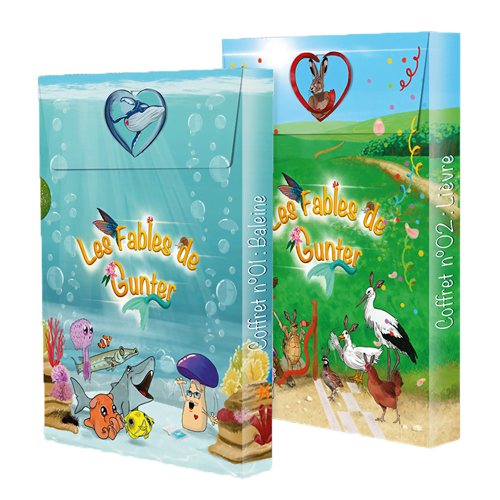
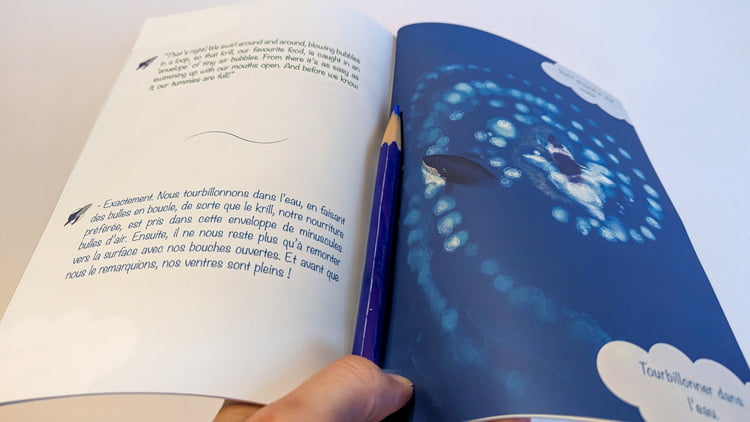
THE Gunter's Fables are a collection of 365 bilingual stories (French and English) for children aged 3 to 15, covering topics such as water, energy, health, food, housing, work, education, and ethics. Available on guntersfables.orgThey are printed on stone paper, an eco-friendly material made of rock powder and recycled plastic, both waterproof and infinitely recyclable. These stories, like those of the Whale gift setaim to develop five intelligences: scientific, emotional, artistic, systemic and practical.


Educational approach and inspirations
The fables are inspired by educators such as Paulo Freire, Maria Montessori And Rudolf Steinerpromoting active learning and critical thinking. Influenced by the study of more than 100 sustainable projects in areas such as water and energy, Pauli designed these stories to encourage children to become agents of ecological change, thus preparing a more responsible future.
Impact and inheritance
Gunter's Fables are adopted in schools worldwide, while the concept of the Blue Economy inspires entrepreneurs and policymakers globally. As a renowned speaker, as noted on A-SpeakersAs a member of the Club of Rome, Pauli continues to shape discussions on sustainable development. His legacy combines education and ecological innovation, leaving a lasting impact for future generations.
Conclusion
Through Gunter's Fables and the Blue Economy, Gunter Pauli merges education and sustainability to inspire children to protect the planet. His initiatives, rooted in a systemic and ecological vision, prepare young people to build a fairer and greener world, thus reinforcing the mission of Gunter's Fables.
External links
Discover other teaching approaches:
Paulo Freire, Maria Montessori, Rudolf Steiner, John Dewey, Humberto Maturana, Jean Piaget, Fritjof Capra
Discover other teaching approaches:
No limits to learning
Discover the eco-friendly stone paper from Gunter's Fables, provided by Armen Paper, for sustainable and responsible education.

The tablet versus the paper
Tablet or paper? Explore the ecological and educational impacts of these choices in a digital world.
Order now
Gunter's Fables