Gunter Pauli and educational inspirations
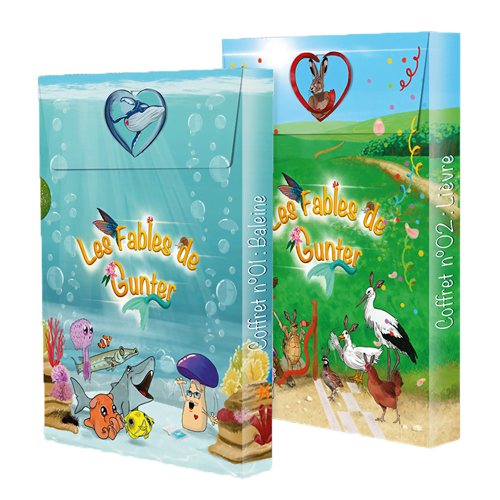
Gunter Pauli, creator of the Gunter fables, drew his inspiration from the visionary work of Paulo Freire, in particular his critical pedagogy focused on social and environmental justice. However, Pauli also explored the contributions of many other influential pedagogues, integrating their ideas into his educational children's stories. Thus, the Gunter fables agree with various modern educational approaches, such as those of Maria Montessori, Rudolf Steiner, John Dewey, Humberto Maturana, Jean Piaget or Fritjof Capra, offering an educational wealth adaptable to different contexts.
Introduction
Humberto Maturana, a Chilean biologist and philosopher, is renowned for his groundbreaking contributions to the understanding of cognition and living systems. Born on September 14, 1928, in Santiago, Chile, and passing away on May 6, 2021, he developed the theory of autopoiesis with Francisco Varela, explaining how organisms maintain their organization through internal processes. His ideas, which connect biology, cognition, and social relationships, offer a unique perspective for environmental education, in harmony with the goals of Gunter's Fables. This article explores his life, his philosophy, and his connection to sustainability, demonstrating how his concepts can inspire children to understand and preserve their environment.

Early life and career
Humberto Maturana was born in Santiago, Chile, into a family of intellectuals. After studying medicine at the University of Chile, he turned to biology and earned a Ph.D. in biology from Harvard in 1958. Returning to Chile, he joined the University of Chile, where he conducted research on perception and neurophysiology, including the vision of frogs, which led him to question the nature of cognition. In collaboration with Francisco Varela in the 1970s, he formulated the theory of autopoiesis, a key concept that has influenced biology, philosophy, and the social sciences. Throughout his career, Maturana taught and wrote books such as Autopoiesis and Cognition (1980) and The Tree of Knowledge (1987), and has lectured worldwide, sharing his ideas on living systems and ethics.
Humberto Maturana's educational philosophy
Maturana's thinking is based on a systemic and biological view of life and cognition. His fundamental concepts include:
- Autopoiesis Living systems, such as cells or organisms, maintain themselves through internal processes, defining their identity and autonomy.
- Cognition as a biological process Knowledge is not an objective representation of the world, but an active construction of the organism in interaction with its environment.
- Collaborative learning Education is a relational process, where individuals co-evolve in social and environmental interactions.
- Ethics of responsibility Understanding our interdependence with other living systems compels us to act responsibly towards them.
These principles emphasize that learning is not simply the acquisition of knowledge, but a dynamic experience linked to life itself, influenced by our relationships and our environment.
Connection to environmental education
Maturana's ideas have profound implications for environmental education:
- Interdependence of living systems Autopoiesis highlights how each organism is connected to its ecosystem, encouraging a holistic view of nature.
- Ecological awareness : By viewing cognition as a relational process, children can understand their role in preserving the environment.
- Sustainable action Maturana's ethics encourage responsible behavior, such as reducing one's ecological footprint, by recognizing our dependence on natural systems.
These concepts align with Gunter's Fables, which seek to teach children the importance of living in harmony with the planet.
Practical implementation in education
Educators can integrate Maturana's ideas in a concrete way:
- Exploration of living systems : Study local ecosystems (e.g., a forest or a pond) to show how each element contributes to the whole.
- Relational activities : Encourage collaborative projects, such as community gardens, to strengthen the links between students and their environment.
- Ethical reflection Organize discussions on the impacts of our choices (consumption, waste) to develop ecological responsibility.
These practices promote a deep understanding of the relationships between living beings, preparing children to adopt sustainable behaviors.
Impact and inheritance
Maturana's influence extends far beyond biology, touching on philosophy, psychology, and even organizational management. His theory of autopoiesis has inspired thinkers in diverse fields, while his ideas on education and ethics have influenced pedagogical approaches centered on relationships and responsibility. In the environmental context, his work provides a scientific and philosophical basis for understanding the interdependence between humankind and nature, a central theme of Gunter's Fables. Until his death in 2021, Maturana continued to promote a worldview where knowledge and action are inseparable from love and respect for life.
Conclusion
Humberto Maturana offered a groundbreaking perspective on life, cognition, and relationships, redefining how we can think about education. By linking biology and ethics, his ideas encourage a systemic approach to environmental education, where children learn to see their place within a network of living systems. Echoing Gunter's Fables, which aim to inspire ecological awareness and sustainable action, Maturana's philosophy provides a powerful framework for educating future generations to live in harmony with the planet.
External links
Discover other teaching approaches:
Paulo Freire, Maria Montessori, Rudolf Steiner, John Dewey, Humberto Maturana, Jean Piaget, Fritjof Capra
Discover other teaching approaches:
No limits to learning
Discover how limitless learning can transform our societies in the face of ecological and social challenges.

The tablet versus the paper
Tablet or paper? Explore the ecological and educational impacts of these choices in a digital world.
Order now
Gunter's Fables