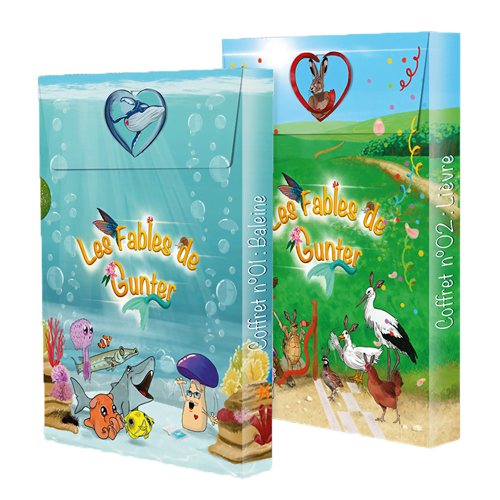
Gunter Pauli and educational inspirations
Gunter Pauli, creator of the Gunter fables, drew his inspiration from the visionary work of Paulo Freire, in particular his critical pedagogy focused on social and environmental justice. However, Pauli also explored the contributions of many other influential pedagogues, integrating their ideas into his educational children's stories. Thus, the Gunter fables agree with various modern educational approaches, such as those of Maria Montessori, Rudolf Steiner, John Dewey, Humberto Maturana, Jean Piaget or Fritjof Capra, offering an educational wealth adaptable to different contexts.
Introduction
Maria Montessori, born on August 31, 1870 in Chiaravalle, Italy, was a visionary educator whose method transformed global education. The first woman to graduate in medicine in Italy, she turned her attention to the education of children, particularly those with disabilities, developing a child-centered approach that emphasizes independence, freedom within limits, and respect for natural development.
Today, the Montessori method is recognized for its effectiveness in holistic development and is particularly relevant in the context of environmental education. This article explores her life, her educational philosophy, and how her method promotes environmental responsibility and sustainability in children.

Early life and career
Maria Montessori's path to education was atypical. After graduating with a medical degree in 1896, she worked with children with intellectual disabilities at the psychiatric clinic of the University of Rome. She observed that these children responded well to sensory stimulation and structured activities, which inspired her to create educational materials and methods tailored to their needs.
In 1907, she opened her first school, the Casa dei Bambini (Children's House), in a poor neighborhood of Rome. This school quickly attracted the attention of educators and psychologists from around the world. Her method was based on observing children's natural behaviors and their ability to learn through exploration and independent discovery.
The Montessori method
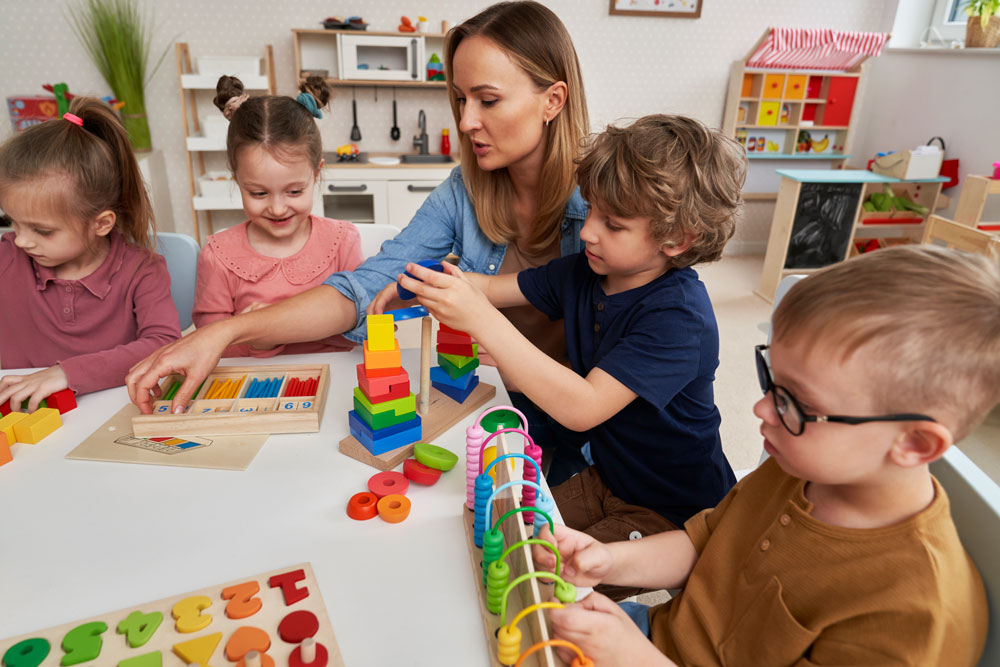
The Montessori method is characterized by several key principles:
- Child-centered approach : Children are encouraged to learn at their own pace and according to their interests.
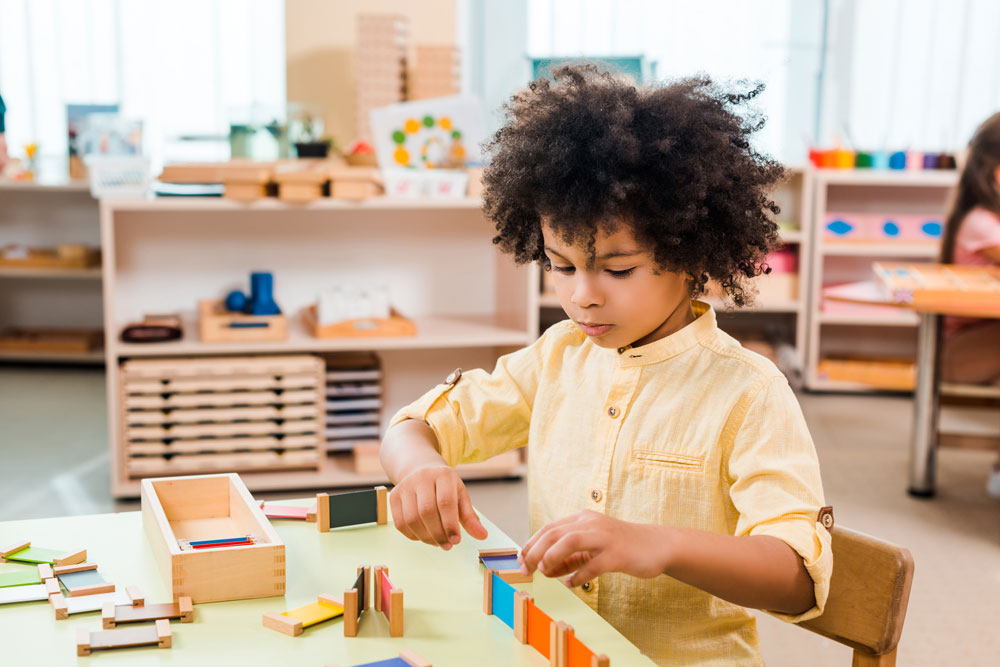
- Practical learning : The use of concrete and manipulable materials helps children to understand abstract concepts.
- Prepared environment The classroom is designed to be orderly and attractive, with materials arranged to facilitate independent exploration.
- Freedom within limits Children have the freedom to choose their activities, but within limits set by the teacher to ensure a productive environment.
- Mixed age groups Classrooms often include children of different ages, promoting peer learning and cooperation.
These principles create a nourishing space where children can develop their full potential, both academic and personal.
Connection to environmental education
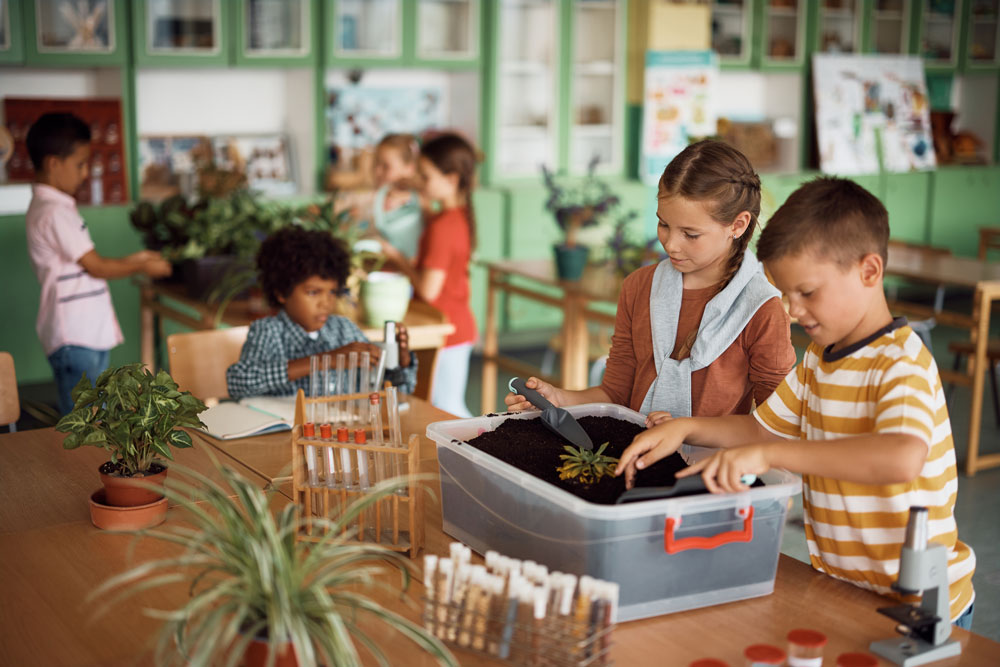
Maria Montessori's emphasis on the prepared environment and the importance of nature in child development makes her method particularly well-suited to environmental education. Montessori classrooms often incorporate natural materials and encourage outdoor activities, fostering a deep connection with the natural world.
- Nature as a teacher Montessori believed that nature offers the best opportunities for children to learn through direct experience. Activities such as gardening, wildlife observation, and exploring natural environments are an integral part of the curriculum.
- Sensory exploration : Emphasis on sensory development helps children appreciate the sights, sounds, smells and textures of the environment, strengthening their understanding and respect for nature.
- Responsibility and stewardship By interacting with nature, children develop a sense of responsibility towards the environment, learning to care for plants, animals and their habitats.
As Maria Montessori stated: "Let children be free; encourage them; let them run outside when it rains; let them take off their shoes when they find a puddle; and, when the meadow grass is wet with dew, let them run over it and trample it with their bare feet; let them rest peacefully when a tree invites them to sleep in its shade; let them shout and laugh when the sun wakes them in the morning as it wakes every living creature that divides its day between waking and sleeping."
Practical implementation in Montessori schools
In Montessori schools, environmental education is a way of life, not just a subject. Here are some specific ways Montessori educators integrate environmental learning:
- Outdoor exploration Regular outings to natural areas allow children to observe and interact directly with the environment.
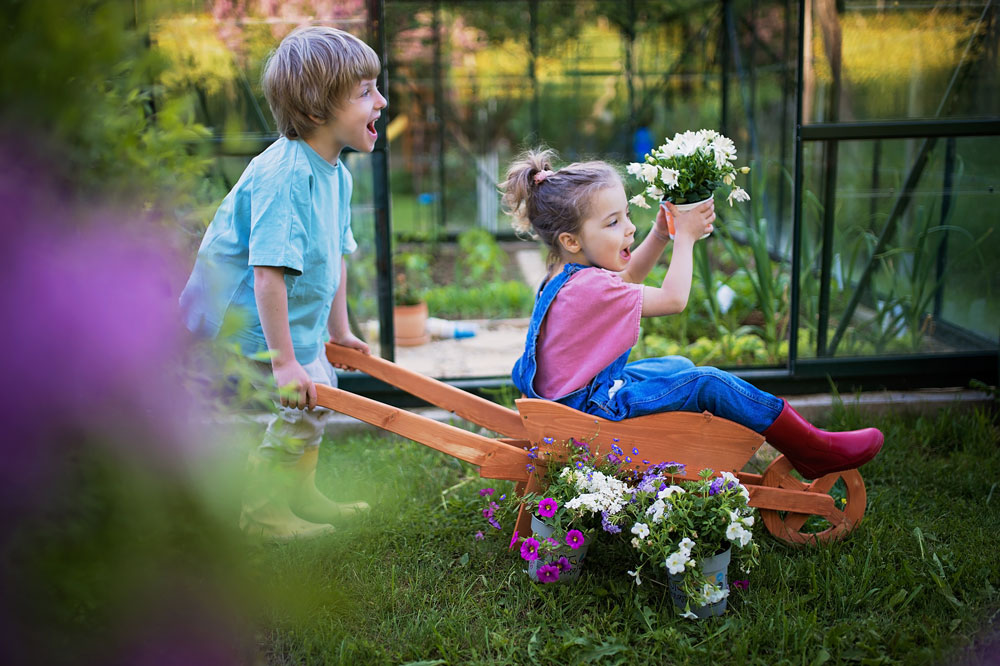
- Gardening Children participate in planting, maintaining and harvesting gardens, learning about plant life cycles and the importance of sustainable agriculture.
- Natural materials : The classroom uses natural materials such as wood, metal and glass, connecting children to the natural world and their teacher to appreciate and take care of these resources.
- Energy conservation Schools practice energy-saving measures, such as turning off lights when not in use and using natural light, teaching children the importance of conserving resources.
- Waste management : Children participate in recycling and composting programs, learning to reduce waste and reuse materials.
By integrating these practices into the daily routine, Montessori schools help children develop a lifetime commitment to environmental management.
Impact and inheritance
Maria Montessori's work has had a lasting impact on education. Her method has been adopted in schools worldwide, and her ideas have influenced numerous educational reforms. Among her notable contributions are:
- Recognition of children's potential Montessori demonstrated that children are capable of self-directed learning and can accomplish great things in the right environment.
- Innovative teaching materials The materials she developed are still used today and are recognized for their effectiveness in teaching concepts through concrete experiences.
- Defense of women's rights As a pioneering woman in medicine and education, Montessori was a role model for women, challenging gender norms and promoting equality.
His legacy continues to inspire educators and parents, providing a framework for raising confident, compassionate, and environmentally conscious children.
Conclusion
Maria Montessori's educational philosophy offers a holistic approach to learning that is both timeless and relevant. By emphasizing the importance of nature and hands-on experiences, her method prepares children to be active participants in creating a sustainable future. For parents and educators involved with Gunter's Fables, which aim to inspire children to become agents of change for the planet, the Montessori method provides valuable insights and practical strategies for fostering environmental awareness and stewardship in young minds.
Images
Portrait of Maria Montessori, pioneer educator
Source: Wikimedia Commons (Public domain)
Children in Montessori classrooms - Children engaged in activities
Source: Envato Element (Blue Education)
To find out more about Montessori pedagogy:
Discover other teaching approaches:
Paulo Freire, Maria Montessori, Rudolf Steiner, John Dewey, Humberto Maturana, Jean Piaget, Fritjof Capra
Discover other teaching approaches:
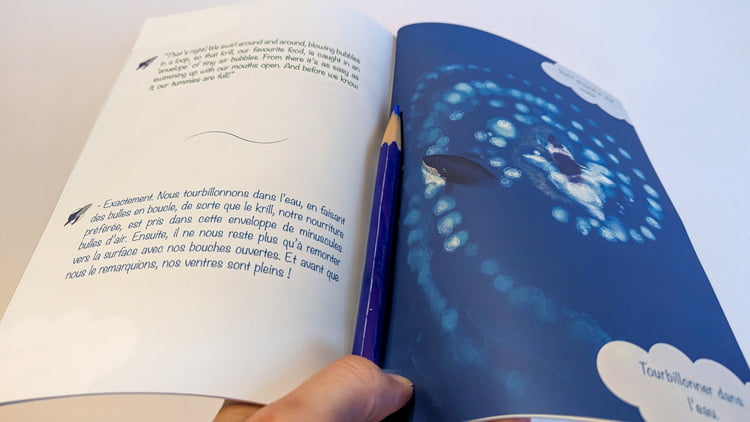
No limits to learning
Discover the eco-friendly stone paper from Gunter's Fables, provided by Armen Paper, for sustainable and responsible education.

The tablet versus the paper
Tablet or paper? Explore the ecological and educational impacts of these choices in a digital world.
Order now
Gunter's Fables