Gunter Pauli and educational inspirations
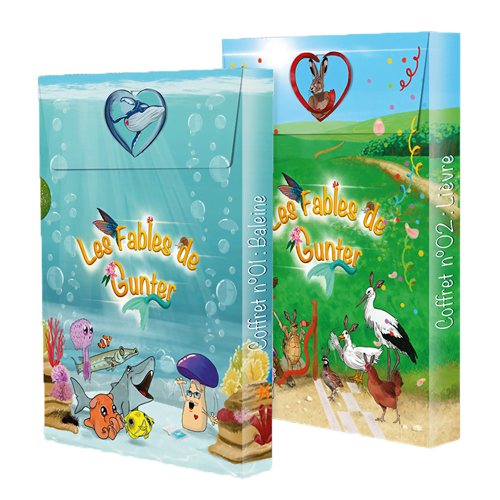
Gunter Pauli, creator of the Gunter fables, drew his inspiration from the visionary work of Paulo Freire, in particular his critical pedagogy focused on social and environmental justice. However, Pauli also explored the contributions of many other influential pedagogues, integrating their ideas into his educational children's stories. Thus, the Gunter fables agree with various modern educational approaches, such as those of Maria Montessori, Rudolf Steiner, John Dewey, Humberto Maturana, Jean Piaget or Fritjof Capra, offering an educational wealth adaptable to different contexts.
Introduction
Rudolf Steiner, an Austrian philosopher, educator, and mystic, is the founder of Waldorf education, an educational approach that emphasizes the holistic development of the child. Born on February 27, 1861, in Kraljevec (then in Austria-Hungary, now in Croatia) and died on March 30, 1925, in Dornach, Switzerland, Steiner also initiated anthroposophy, a spiritual philosophy that influenced his teaching methods. His ideas, which integrate art, nature, and spirituality, are particularly relevant to environmental education, resonating with the goals of Gunter's Fables. This article explores his life, his pedagogy, and its connection to sustainability, showing how his concepts can inspire children to live in harmony with nature.

Early life and career
Rudolf Steiner was born into a modest family in Central Europe. From a young age, he showed an interest in philosophy and science, studying at the Vienna University of Technology. In the 1890s, he worked as an editor of Goethe's scientific writings in Weimar, which influenced his thinking on nature and the human spirit. In 1902, he founded Anthroposophy, a spiritual doctrine that seeks to unite science, art, and religion. In 1919, at the request of Emil Molt, director of the Waldorf-Astoria cigarette factory, Steiner established the first Waldorf school in Stuttgart, Germany, to educate the children of factory workers. This initiative marked the beginning of a worldwide educational movement, with hundreds of Waldorf schools today. Steiner also contributed to fields such as biodynamic agriculture and anthroposophical medicine, leaving a multidisciplinary legacy.
Rudolf Steiner's educational pedagogy
Steiner's Waldorf pedagogy is based on a holistic view of the child, integrating body, soul, and spirit. Its key principles include:
- Three-phase development Steiner divides childhood into three stages – up to 7 years (will), from 7 to 14 years (feeling), and from 14 to 21 years (thinking) – each requiring specific educational approaches.
- Art education Art (music, drawing, theatre) is central to stimulating the imagination and emotional balance.
- Connection with nature Children are encouraged to interact with the natural world to develop a deep connection with the environment.
- Rhythmic learning The teaching follows natural cycles (day, seasons) to promote inner harmony.
This approach aims to cultivate creative, autonomous and conscious individuals, capable of contributing to society in a balanced way.
Connection to environmental education
Steiner's pedagogy is intrinsically linked to environmental education:
- Immersion in nature Outdoor activities, such as gardening and observing the seasons, reinforce respect for ecosystems.
- Sustainability by example : The influence of Steiner's biodynamic agriculture teaches practices that respect the earth.
- Ecological spiritual awareness Anthroposophy encourages a worldview where man is in symbiosis with nature.
These elements are consistent with Gunter's Fables, which seek to raise children's awareness of ecological issues through an integrated approach.
Practical implementation in education
Educators can apply Steiner's ideas in a concrete way:
- Gardening and seasonal activities : Cultivating a school garden or celebrating the seasons to anchor children in natural rhythms.
- Ecological art projects : Creating works of art with natural materials to explore the beauty and fragility of the environment.
- Stories about nature : Using stories and myths to convey values of respect and care for the planet.
These practices promote an emotional and practical connection with nature, essential for sustainable education.
Impact and inheritance
Rudolf Steiner's influence is vast and enduring. With over 1,000 Waldorf schools worldwide, his pedagogy continues to shape generations of students sensitive to art, nature, and community. His approach to biodynamic agriculture has also inspired the modern ecological movement, influencing sustainable farming practices. In environmental education, Steiner offers a method for integrating spirituality and science, fostering a respectful relationship with the Earth. His legacy lives on through institutions like the Anthroposophical Society and Waldorf schools, which promote a holistic view of learning and life.
Conclusion
Rudolf Steiner proposed a unique pedagogy that balances intellectual, emotional, and spiritual development while grounding children in the natural world. His Waldorf vision, with its emphasis on nature and sustainability, provides a powerful framework for environmental education. Echoing Gunter's Fables, which aim to inspire ecological awareness and responsible action, Steiner's ideas invite educators and parents to cultivate in children a deep love for and responsibility toward the planet.
Images

Source: Wikimedia Commons (Public domain)
External links
Discover other teaching approaches:
Paulo Freire, Maria Montessori, John Dewey, Humberto Maturana, Jean Piaget, Fritjof Capra
Discover other teaching approaches:
No limits to learning
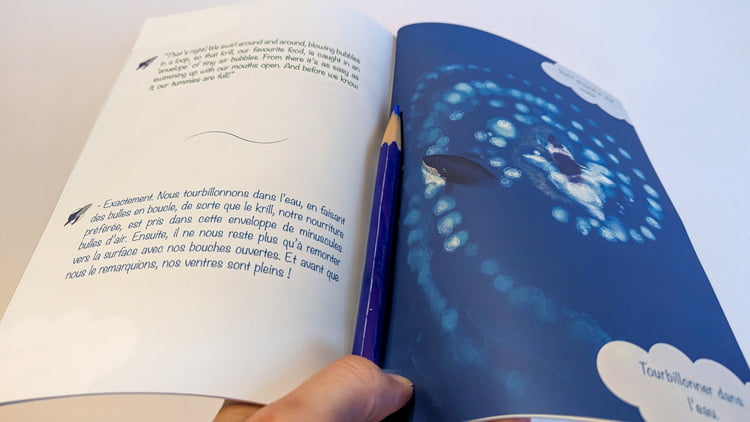
Discover the eco-friendly stone paper from Gunter's Fables, provided by Armen Paper, for sustainable and responsible education.

The tablet versus the paper
Tablet or paper? Explore the ecological and educational impacts of these choices in a digital world.
Order now
Gunter's Fables