The thinkers who inspire Gunter’s Fables
Fritjof Capra: Physicist and Thinker of Living Systems
Discover how Fritjof Capra inspires systemic ecological education to connect children with a sustainable future.
By Axel Rihs · Published on 27 March 2025 · Updated on 16 October 2025
Gunter Pauli and his pedagogical inspirations
Gunter Pauli, creator of Gunter’s Fables, drew inspiration from the visionary work of Paulo Freire, notably his critical pedagogy centered on social and environmental justice. However, Pauli also explored the contributions of many other influential educators, weaving their ideas into his educational stories for children. As a result, Gunter’s Fables resonate with a range of modern pedagogical approaches, such as those of Maria Montessori, Rudolf Steiner, John Dewey, Humberto Maturana, Jean Piaget, and Fritjof Capra, offering an educational richness adaptable to different contexts.
Introduction
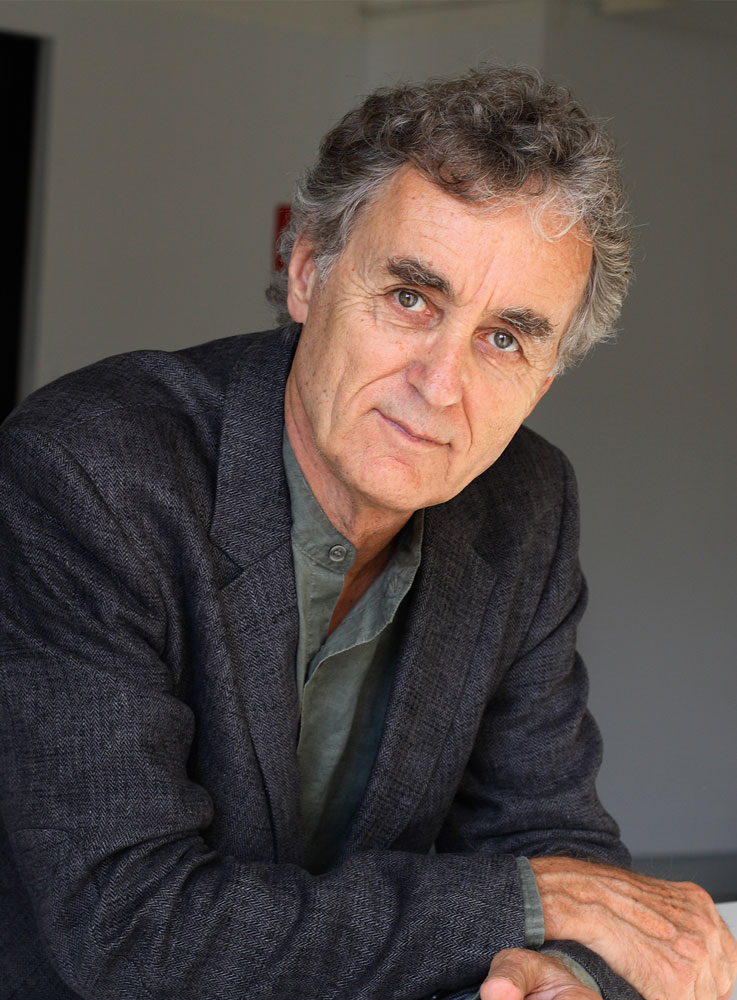
Fritjof Capra, an Austrian physicist and writer, is celebrated for his systemic, interdisciplinary approach to science and society. Born on 1 February 1939 in Vienna, he rose to world fame with his book The Tao of Physics (1975), which explores the parallels between modern physics and Eastern philosophies. His work on living systems and sustainability has shaped the fields of ecology, education, and global thinking. By linking science, spirituality, and the environment, Capra offers a vision especially relevant to environmental education, in harmony with the goals of Gunter’s Fables. This article explores his life, his philosophy, and its connection to sustainability, showing how his ideas can inspire children to adopt a systemic view of the world.
Early Life and Career
Fritjof Capra was born in Vienna, Austria, into a family of intellectuals. He studied physics at the University of Vienna, earning a doctorate in theoretical physics in 1966. After working as a researcher at prestigious institutions such as the University of Paris and the Lawrence Berkeley Laboratory in California, he turned away from pure research to explore the philosophical and social implications of science. His first book, The Tao of Physics, marked a turning point, popularizing the idea that modern science and spiritual traditions share a common vision of interconnection. Later works, such as The Turning Point (1982) and The Web of Life (1996), deepened his systemic thinking, applying his concepts to ecology, education, and sustainable economics. Today, Capra is also known as co-founder of the Center for Ecoliteracy in California, which promotes ecological education.
Fritjof Capra’s Educational Philosophy
Capra’s thinking is grounded in a systemic view, in which everything is interconnected. His key concepts include:
- Systems thinking: Understanding the world as a network of relationships rather than a collection of isolated objects.
- Interconnection of living systems: Organisms, ecosystems, and human societies function as interdependent systems.
- Ecological education: Learning should reflect the principles of nature, such as cooperation and sustainability, to prepare students for a viable future.
- Interdisciplinary synthesis: Combining science, art, and the humanities for a holistic understanding of global challenges.
These ideas promote an education that transcends traditional disciplines, encouraging an integrated, responsible view of the world.
Connection to Environmental Education
Capra’s work is directly linked to environmental education:
- Holistic vision: Systems thinking helps children see the links between their behavior (consumption, waste) and ecosystems.
- Nature-inspired sustainability: Capra proposes imitating natural processes, such as recycling cycles, to teach sustainable practices.
- Global awareness: His ideas encourage reflection on planetary issues, such as biodiversity and climate change.
These principles align with Gunter’s Fables, which aim to raise children’s awareness of their role in an interconnected world.
Practical Implementation in Education
Educators can integrate Capra’s ideas in concrete ways:
- Studying ecological networks: Analyzing a local ecosystem to show how every element (plants, animals, humans) is connected.
- Nature-inspired projects: Creating sustainable systems, such as organic gardens or compost bins, inspired by natural cycles.
- Interdisciplinary discussions: Combining science, literature, and art to explore themes such as ecological balance.
These practices build systemic understanding and practical skills for a sustainable way of life.
Impact and Legacy
Fritjof Capra has had a profound impact on science, ecology, and education. His books, translated into many languages, have inspired generations to rethink their relationship with nature. The Center for Ecoliteracy, which he co-founded, has shaped educational programs in the United States and beyond, promoting a systemic approach to ecological learning. In the field of environmental education, Capra offers a framework for teaching children how living systems intertwine, preparing them to meet the challenges of the 21st century. His work continues to inform educators, scientists, and policymakers seeking sustainable solutions.
Conclusion
Fritjof Capra transformed our view of the world by shedding light on the interconnection of living systems. His systems thinking and his advocacy for ecological education offer an innovative approach to teaching sustainability to children. In resonance with Gunter’s Fables, which encourage environmental awareness and responsible action, Capra’s ideas inspire educators and parents to raise a generation capable of understanding and preserving the complex web of life on Earth.
Fritjof Capra and Gunter’s Fables
In resonance with Gunter’s Fables, which encourage environmental awareness and responsible action, Capra’s ideas inspire educators and parents to raise a generation capable of understanding and preserving the complex web of life on Earth.
Discover the fables