
Maggot slime


Do you know about the superpowers of maggots?
Over lunch, two quails discuss the potential of fly larvae: their exceptional growth, fantastic nutritional capacity, and extraordinary medicinal properties. An animal that is not highly regarded, yet possesses numerous advantages.
Author: Gunter Pauli
Illustrator: Annabelle Carneiro
Fable No. 44
Category: Food
Age: 3 to 15 years old
Characters: Quail & Quail
Pagination: 40 pages
Format: Paperback 24 x 16.7 cm
Blue Education publication date: 2023
Available in the box: Hare
Maggot Slime: An Educational Fable about Food
"Maggots Slime" is inspired by Godfrey Nzamujo, an engineer and PhD specializing in integrated agricultural systems. Through his work, he highlights a surprising resource: maggots. Often perceived as repulsive, these larvae, hatched from fly eggs, possess remarkable qualities. Cultivated from organic waste, they produce a biomass very rich in protein to feed animals, while also helping to recycle agricultural residues. But their potential doesn't stop there. Maggot slime and secretions are also of interest to medicine: they can clean wounds, promote healing, and limit certain infections. This simple and circular approach transforms waste into a valuable resource for agriculture, health, and the environment.
Available in the
Hare educational box


Excerpt from the fable Maggot slime © Gunter's Fables by Blue Education

Additional resources for
parents and teachers
An educational fable about food inspired by Father Godfrey Nzamujo

Discover the Songhaï website:
www.songhai.org

Father Godfrey Nzamujo He was born in Kano, Nigeria, and sent to California, USA, to study. He began a prestigious academic career, earning degrees in agronomy, economics, and information technology. However, he longed to contribute to the well-being of African people. Thus, instead of dedicating his life to improving the lives of Americans, he decided to return to Africa to establish the Songhai Center in Benin. He did so in 1985, after his country of origin refused to provide him with land.
He dedicated the rest of his life to creating a production center where those who are illiterate and impoverished have a chance to produce their own food and maintain their own jobs. He appointed a blacksmith to make equipment and trained farmers to save seeds and transform waste into value. It was in this quest to maximize benefits that Father Nzamujo integrated maggot farming into the value and employment generation chain. The first center in Porto Novo expanded to other centers in Parakou, Savalou, and Kinwedji (Benin). Each year, the Songhai Center trains 300 Africans to produce their own food and create jobs, lifting them out of poverty by creating wealth with what they already have.
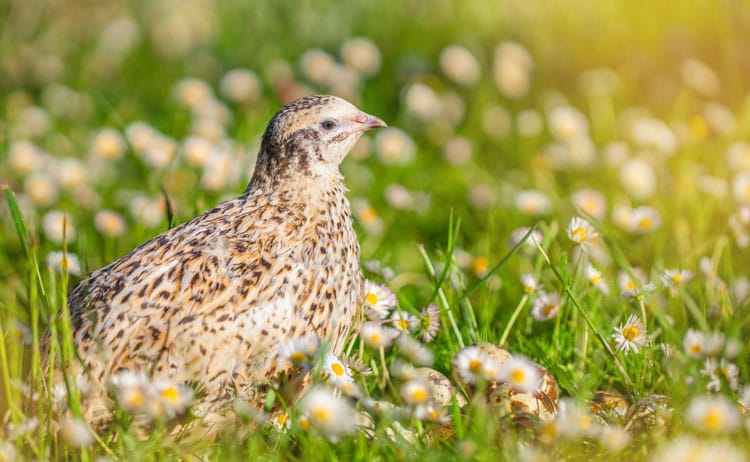
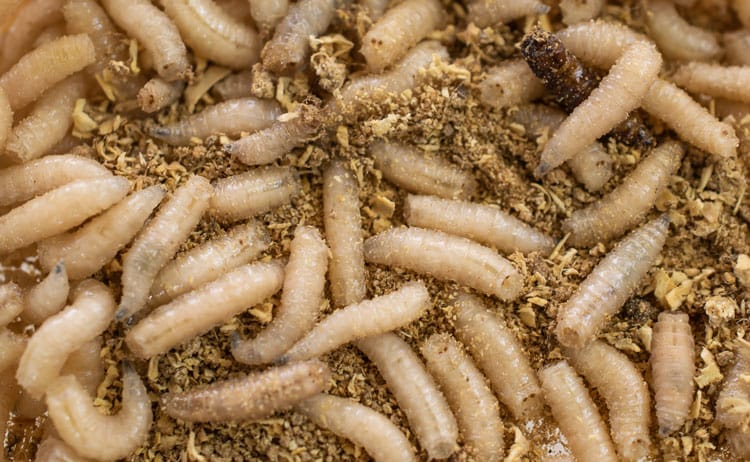
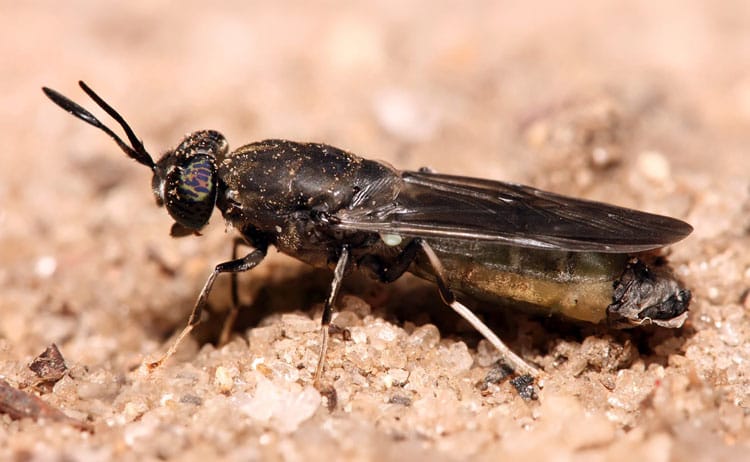
What do these 3 animals look like?
A quail
Fly larvae
Black Soldier Fly
Some videos to explore further
Presentations of Father Godfrey Nzamujo and his Songhai model.
Discover the work of Jade Tetohu, a doctoral student who raises black soldier fly larvae with the aim of setting up an industrial pilot project.
Discover the use of maggots in medicine through maggot therapy, a biosurgical technique that helps to clean and treat certain wounds.
Start your fly worm production.
This tutorial explains how to produce maggots at home, primarily to feed poultry and fish farms.
Maggot production relies on the recovery of organic waste, particularly meat and fish from butchers and fishmongers, as well as kitchen scraps, while maintaining a humidity level of 60 to 80% and a temperature of 25 to 30°C to ensure optimal growth. It also requires rotating several tanks to guarantee continuous production and ultimately provides a usable protein source for feeding poultry, fish, pigs, and reptiles, in live, dried, or meal form.
Take it to the next level
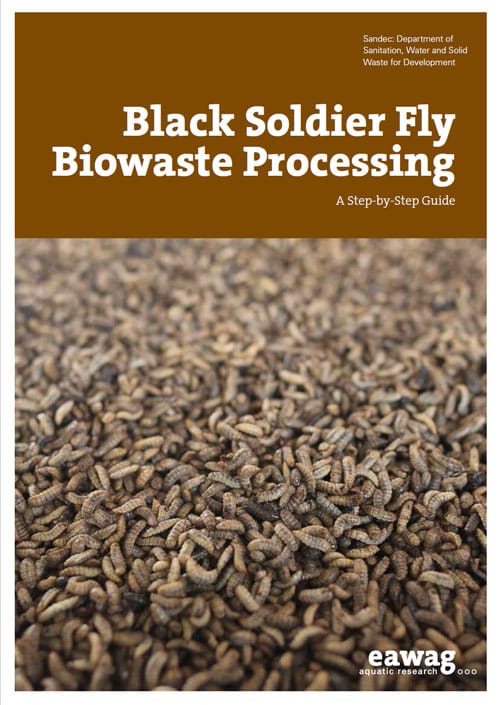
Discover step by step how to transform biowaste into protein using the black soldier fly.
Download the PDF published by Eawag – Swiss Federal Institute of Aquatic Science and Technology
Available in box set no. 02 - Hare
French - English
Educational fables such as “Maggots’ slime” offer children a new perspective on food innovation. This educational fable about food illustrates how even the most unexpected resources, such as fly larvae, can play a crucial role in nutrition, medicine, and sustainability.